Shaping the Future: Why the Energy Transition Needs Women in STEM


The transition to a climate-neutral global economy demands an unprecedented scale-up of technological innovation, skilled labour, and inclusive governance. Yet one critical enabler remains consistently undervalued: the full participation of women in science, technology, engineering, and mathematics (STEM).
Globally, women have surpassed men in higher education enrollment. In the European Union (EU), among individuals aged 25–34, 48% of women have completed tertiary education, compared with 37% of men. Yet women remain significantly underrepresented in STEM fields.
According to UN Women (2023), women account for less than 30% of the global STEM workforce, with particularly low representation in engineering, digital technologies, and energy-related fields. This global pattern is also reflected in the EU: in 2021, women represented only 32.8% of all STEM graduates.
The energy sector remains one of the least gender-balanced STEM fields. In the EU, women comprise just 25% of the workforce in energy companies and only 22% of the Research and Innovation (R&I) workforce. Within the sector itself, the gap becomes even more evident: women’s participation in renewable energy is not significantly higher than in traditional fossil fuel industries.
Increasing women’s participation in STEM is not only a matter of fairness, but also a strategic requirement for innovation capacity, energy security, and the resilience of the global net-zero transition.
Why Gender Balance Matters
A growing body of evidence shows that organisations with greater gender diversity in senior roles consistently outperform their peers. They make better decisions, manage risks more effectively, and are more likely to foster long-term strategic thinking. All these qualities are essential in rapidly evolving energy markets.
Gender balance also strengthens innovation ecosystems. When women are underrepresented in research and development, entire technologies risk being built on narrow perspectives. Women bring insights rooted in environmental and social awareness, long-term planning, and community engagement, which are crucial for advancing cleaner mobility, renewable energy systems, and circular economy models.
Finally, gender balance is necessary to address critical skills shortages. Achieving the EU’s 2050 climate targets alone will require around 200,000 additional women entering STEM-based energy roles. Globally, shortages in hydrogen technology, batteries, renewables, digitalisation, and climate finance are already slowing down the energy transition.
Structural Barriers in the STEM Pipeline
Persistent systemic barriers continue to shape women’s participation across the STEM pipeline. Women remain significantly underrepresented in foundational fields such as engineering, computer science, and manufacturing, which are central to the energy transition. Even when they enter the sector, many face masculinised cultures, subtle biases, or explicit stereotypes that affect recruitment and promotion practices.
Mid-career retention is another obstacle. Women still carry a disproportionate share of unpaid care work, with women performing three times more unpaid care than men and 708 million excluded from paid work due to caregiving responsibilities (ILO, 2024), and long-hours cultures or inflexible working arrangements often lead to drop-off during critical career years. Limited access to mentors, professional networks, and transparent advancement pathways further weakens the leadership pipeline.
These challenges appear consistently across regions, demonstrating that the problem is systemic and global, not an EU-specific phenomenon.
Global Lessons from Cross-Sector Career Pathways
Experiences outside Europe offer valuable insight into the diverse ways women enter and grow within sustainability and STEM-adjacent fields. Many follow non-linear trajectories, moving between universities, NGOs, multilateral institutions, startups, and private-sector sustainability roles. Such pathways build systems literacy, as women become familiar with policy frameworks, institutional governance, and the complex interdependencies that shape environmental decision-making.
Working across sectors enhances fluency in both technical and social dimensions of sustainability. It also strengthens adaptive leadership: women learn to operate in fragmented or resource-constrained environments and to bridge data with lived experience, ensuring that evidence-based decisions reflect community realities and long-term development priorities.
International development organisations, particularly those working in the Global South, emphasise that sustainable transformation succeeds when research, financial mechanisms, governance structures, and community leadership are aligned. Many women’s career pathways mirror precisely this integrative approach.
What Accelerates Progress
Progress depends on coordinated action. Organisations that invest in mentorship, inclusive leadership training, and flexible work arrangements retain more women and strengthen their talent pipelines. Policy interventions such as gender quotas, public awareness campaigns, and structured re-entry pathways help counter systemic barriers and increase visibility. In education, gender-responsive curricula and meaningful links between schools and industry encourage young women to engage with STEM fields from an early age.
Across contexts, the most effective approaches are those that combine institutional commitment, targeted policy, and a sustained effort to reshape social norms.
Building an Energy Transition That Leaves No Talent Behind
Reaching climate and sustainability goals requires more than technological progress. It relies on diverse leadership, inclusive innovation, and the full mobilisation of global human capital. Women contribute essential skills to STEM by bridging disciplines, contextualising data, driving community-centred solutions, and strengthening governance. Their participation is indispensable for designing energy transitions that are socially equitable and resilient.
If the global community is to meet its climate ambitions, women cannot remain an underused resource. Empowering their participation in STEM is not only necessary; it is transformative.
Spotlight on Emerging Talent: Rhona Sinamtwa’s Systems Approach to Sustainability
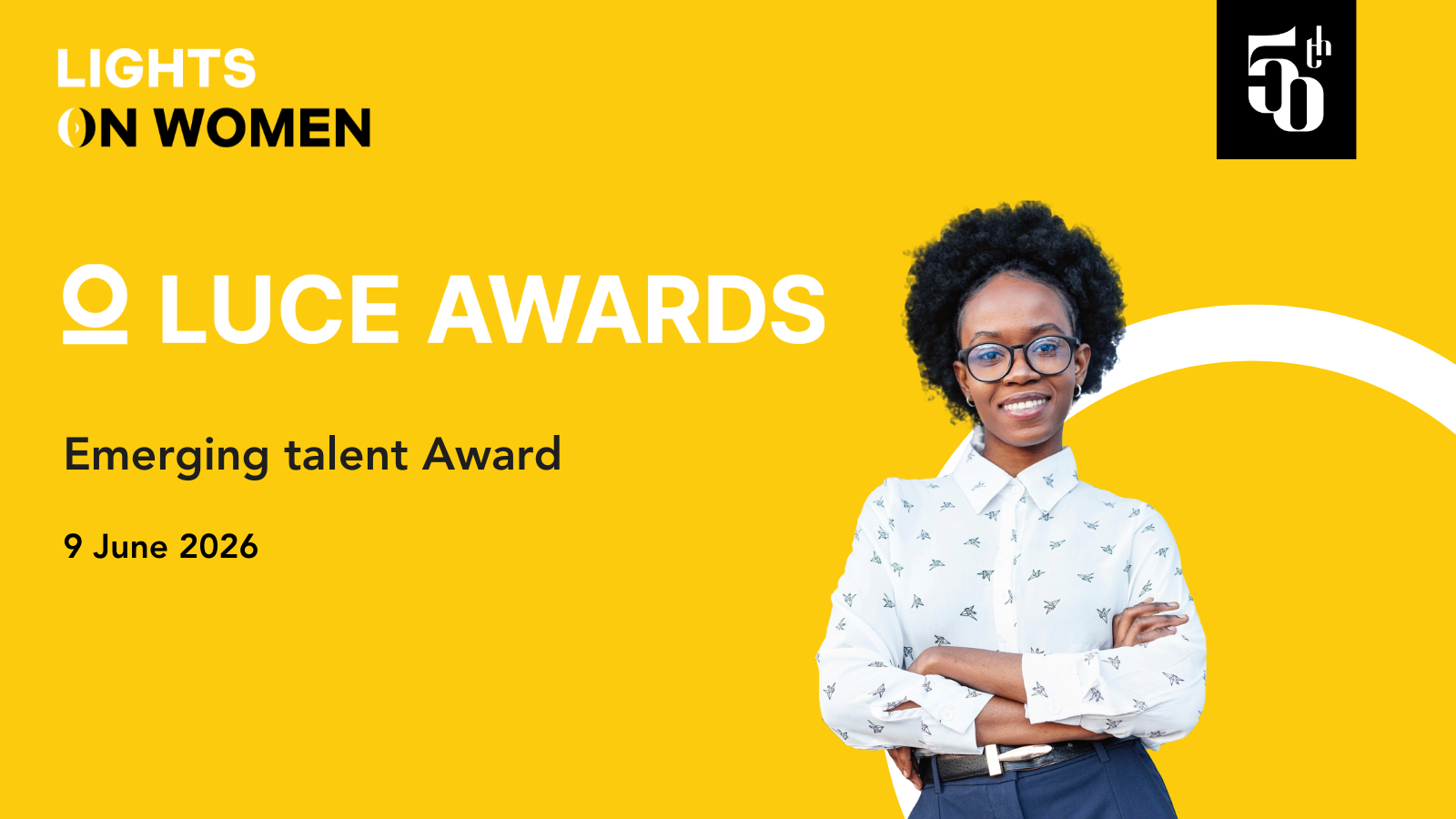
The experiences of emerging leaders illustrate the transformative potential of women’s contributions to the energy and sustainability transition. Among them, Rhona Sinamtwa, winner of the 2025 LUCE Emerging Talent Award, exemplifies how cross-disciplinary thinking, sustainability expertise, and collaborative leadership can be shaped through engagement with progressive institutions and networks.
Having completed a Master’s in Environmental Sustainability at the University of Ottawa, Rhona represents the non-linear pathways common among women in STEM-adjacent fields. Her development has been supported by platforms such as Onyx Initiative, which strengthens career pathways for Black professionals; FORA: Network for Change, which builds governance and leadership capacity among young changemakers; and Leagler, which supports newcomers in navigating professional and institutional systems. Alongside experience in research, policy, and sustainability organisations, these networks have reinforced her cross-sector fluency.
A formative innovation experience emerged through the Hult Prize Competition, where Rhona collaborated with Robel N’gong’a, Anurika Onyeso, and Parafaite Ikirezi to develop a circular textile initiative. Shaped through collective problem-solving and interdisciplinary teamwork, the project demonstrated the power of inclusive innovation. She later deepened this work through the YALI programme, strengthening her understanding of social enterprise and impact leadership.
Across research, start-up, and development settings, Rhona has built strong systems literacy and stakeholder engagement skills.
Her trajectory reflects a broader truth: women’s interdisciplinary expertise and collaborative leadership are essential to a just and effective global transition.
Resources:
Erudera. (2024). Women in STEM: Data Show Rise in Number of Graduates in EU, Romania Leads
European Commission: Directorate-General for Research and Innovation, DIW-Econ, Empirica, Fraunhofer-IAO CeRRI, GDCC, Portia & ÖGUT. (2024). Gender balance in the R&I field to improve the role of women in the energy transition: final report and annexes. Publications Office of the European Union.
Eurostat (2023). More women than men held tertiary degrees in 2022
Eurostat. (2025). Scientists and engineers in Europe. European Commission.
International Labour Organization (2024). Unpaid care work prevents 708 million women from participating in the labour market
OECD. (2021). Why do more young women than men go on to tertiary education?
UNESCO Institute for Statistics. (2025). Women, education and STEM: Global trends in STEM graduates.
UN Women. (2023). Gender Equality: Women’s Participation in STEM.
United Nations. (2025). Women and Girls in Science.
World Economic Forum. (2024). Global Gender Gap Report 2024.

Stay in the know
Get the Lights on Women newsletter.